

In partnership with

Welcome to Money As If, the surprise gift your best good friend got you for Christmas. Today’s stocking stuffers:
Weird money lessons from 2025
A (very official) 2026 financial Tarot card reading
Unboxing (the concept of) pricey Advent calendars
— Jeanine
P.S. Liking Money As If? Share that referral link below!
P.P.S. Money As If will be off next week for Christmas break, but back on January 2 with some thoughts on financial New Year's resolutions. Happy holidays!
IN THESE, OUR (POSSIBLE) END TIMES
What did 2025 teach us about money?
It's been a long, weird year, that is, perhaps fortunately, almost over. To celebrate wrap it all up, I thought we'd revisit some of the big money lessons from the past year and prepare for a hopefully less weird 2026.
Sometimes, the money choices we make are between bad … and bad.
I kicked off Money As If with a discussion on whether homebuying was still a "smart" financial move, after my brother's attempt to buy a home in California reinforced for me, a former homeowner, how expensive this purchase has become in recent years. (Housing prices are high, mortgage rates aren't exactly low, and homeowners insurance, especially in climate-challenged areas, isn't even guaranteed.)
I certainly wasn't the first person to pose this question, and I won't be the last. If anything, there's been an uptick in personal finance experts suggesting renting is a smart move these days — a position that usually results in at least some dunking from realtors, Twitter finance pros, and even older homeowners. (Renting is a waste of money! What about the American Dream?)
But here's what gets missed in this and many other mainstay personal finance arguments: No one is saying renting is good. They're simply saying renting is the better of two bad options, a non-binary that has increasingly crept into our daily lives (Take on crippling student loan debt or forego college? Cancel health insurance or pay $3,000 a month for it? Stay home with the kids and hope my partner doesn't lose benefits or pay 10% of our income on child care?)
And listen, I'm not pointing this out to be a Debbie Downer. The news might not be good, but there's a certain freedom in recognizing that we can't always do the "right" money thing; we can just use the information we have to make the best one.
The bill creep is real.
And everywhere, so to speak. This past year, I tackled skyrocketing car insurance bills, escalating energy bills, whatever the hell is going on with streaming, and $1,000 credit card annual fees, just to name a few.
And while I’m willing to concede that I'm absolutely terrible about curbing bill creep in any timely fashion (a New Year's money resolution, perhaps?), I suspect I'm not the only one surprised by how quickly one's bank account can get drained by non-discretionary spending these days.
Inflation truly fits that old "frog-boiling-in-water" metaphor where you sense your bills are going up, but don't realize by how much until you're paying $400 for pet insurance.
That's why, as much as I loathe budgets, I think it’s worthwhile to go through your bank statements and record the price of your current monthly bills in a spreadsheet. That way, you know what you need to cover them in a given month — and can make more informed decisions about what to negotiate or cancel.
We do need (some) spending rules.
Another old-school personal finance bit I'm hesitant to endorse, but over the course of 2025, I started to realize that there are "the ways things should be" and then "there are ways things are," and they pretty much always diverge.
So, for instance, I hate to say "have a side hustle," because no one should have to work two jobs, but it isn't the worst idea in a time of heightened job insecurity.
Likewise, with splurging, I want to say: "Buy those $1,000 Gucci shoes and don't feel guilty about it! The ultra-rich aren’t the only ones who deserve nice things.” But that seems irresponsible when toilet paper costs $30 and a trip to Dave & Buster's will cost you an easy hundo.
I don't want to get too prescriptive (not my style, you may know), but I do like where we landed during the Great Labubu Craze of 2025. When faced with a spending decision, ask yourself these three questions:
Do I want this?
Can I afford it?
Will I use it later?
Only invest money you're OK with losing on alternative assets
We explored meme coins, crypto, private equity, real estate, commodities (in 401ks, no less), and taking more risk with our assets to build wealth in general, and the answer was pretty much always the same: You can invest in these things, or take risks. so long as you'd be fine (financially and emotionally) if you were to lose all that money.
7 Ways to Take Control of Your Legacy

Planning your estate might not sound like the most exciting thing on your to-do list, but trust us, it’s worth it. And with The Investor’s Guide to Estate Planning, preparing isn’t as daunting as it may seem.
Inside, you’ll find {straightforward advice} on tackling key documents to clearly spell out your wishes.
Plus, there’s help for having those all-important family conversations about your financial legacy to make sure everyone’s on the same page (and avoid negative future surprises).
Why leave things to chance when you can take control? Explore ways to start, review or refine your estate plan today with The Investor’s Guide to Estate Planning.
RECEIPTS
And, now, for my next-to-last trick …
So I bought a deck of tarot cards after Disney successfully convinced me, a 44-year-old woman, to make Agatha All Along a part of my personality. (Good job, Disney!)
I pull it out now and then for party tricks or to answer very, very serious questions, like "Will the Chiefs make the playoffs?" — which, side note, it was pretty spot-on about — and I figured we'd have a little fun in this year-end issue by asking the deck to prognosticate on the 2026 economy and financial outlook. And, listen, it could be worse!

A Five-Card Cross
The Ace of Swords and The Emperor reversed aren't … great, signifying a mix of confusion, delayed action, loss of control, and tyranny. Still, they're in past and present positions, while the Page of Pentacles, which represents our potential future, suggests new financial beginnings, grounded growth, and even income increases. Plus, the reversed IV of cups signifies an end to financial apathy and a call to move forward.
Of course, the VII of cups suggests this might all be wishful thinking, but, hey, you know, who believes in Tarot anyway?
FRESH GREEN
Nowadays, most financial takes are boilerplate. These aren't.
So I do think there are times and places to quit a job when you don't have another one lined up, but I'm sharing this advice from The Job Hopper because, given the current job market, now is pretty universally not one of them.
A good (and quick!) explainer on what to make of this week's very confusing (and incomplete!) inflation data.
Not for nothing, but from a retailer's perspective, Target might just be having the worst holiday shopping season ever.
IT’S A TRAP
And, finally, today, in when “things I would buy if I could, you know, just buy things" meets "what the hell are we doing here anymore?"
Ad vent
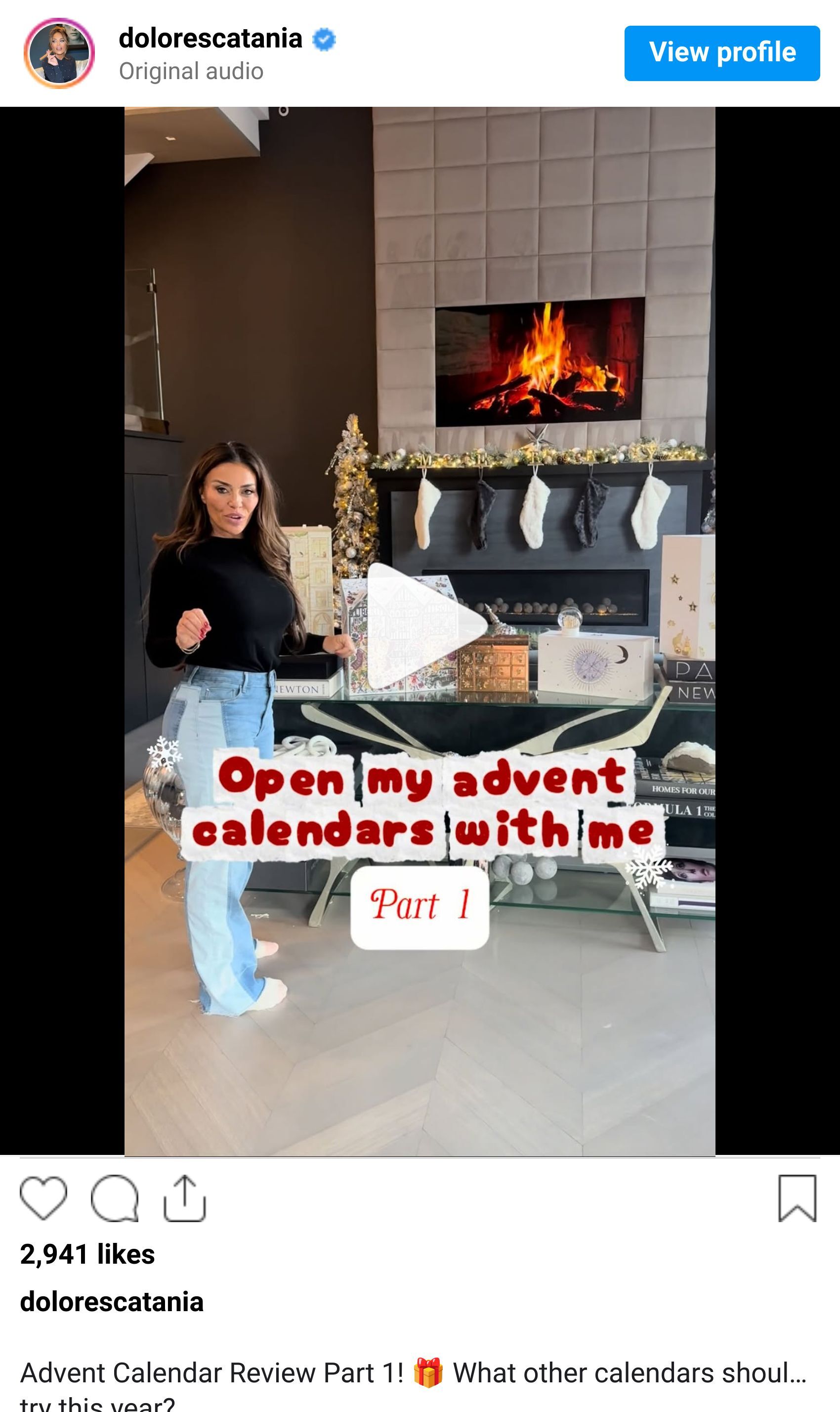
I could have been persuaded to thirst after and perhaps even buy one of the many, many, many Advent calendars on sale this holiday shopping season, because they seem fun and festive, and, boy, do I love a good mystery box.
Still, I wanted to call out just how "2025 consumerism" these things are in that they are (a) tailor-made for influencer marketing (see above), (b) a great way to get recipients to love at least one of your products that they simply must buy again and again and again and, (c) more often than not ludicrously expensive.
Plus, if you buy a loved one an Advent Calendar for Advent, do you also have to buy them a Christmas present? Some of these things, rather pointedly, only have 24 gifts. I guess that's where the "12 Days of Christmas" versions come in? 🤔
P.S. I've noticed that, given Advent is almost over, plenty of calendars are on discount, so if you truly want to experience an unboxing, now's the time.
Got questions, comments, receipts, tips, thirst traps, etc. you’d like to share? Send them to [email protected].
This article is for educational purposes only. We don’t recommend or advise individuals to buy, not buy, sell, or not sell particular investments or other assets, as everyone’s circumstances are different. Also, it’s your money and ultimately up to you to decide the best use for it.